
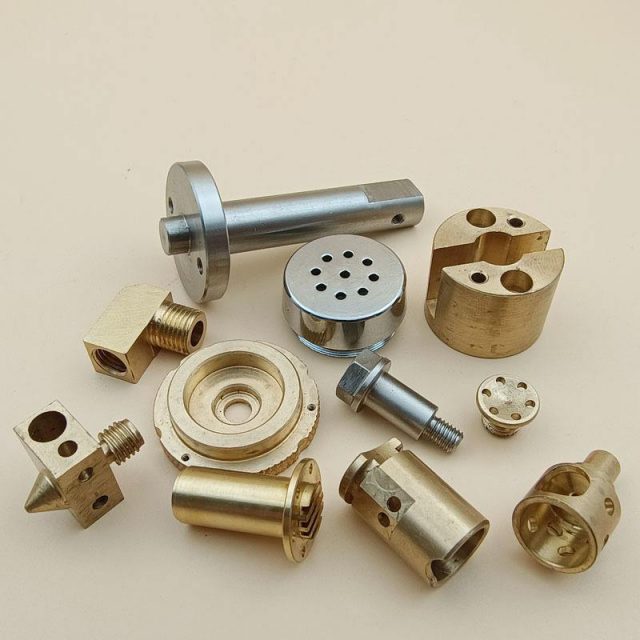
Copper die casting is a manufacturing process that involves using molten copper or copper alloy to create intricate and complex shapes by forcing the material into a mold under high pressure.
Here’s an overview of the copper die casting process:
1. Material Selection: The first step is to select the appropriate copper or copper alloy for the specific application. Copper alloys are often chosen for their desirable properties, such as high thermal and electrical conductivity, corrosion resistance, and good mechanical properties.
2. Melting: The chosen copper or copper alloy is melted in a furnace to create a molten metal.
3. Die Casting Machine: The molten copper is then injected into a die casting machine, which consists of two hardened steel molds (the “die”) that are designed to match the shape of the desired part. One of these molds is stationary, while the other is movable.
4. Injection: The molten copper is forced into the mold cavity under high pressure. This pressure is typically maintained until the material solidifies.
5. Cooling and Solidification: After injection, the copper rapidly cools and solidifies within the mold cavity.
6. Ejection: Once the copper has solidified, the movable mold is opened, and the finished copper part is ejected from the mold.
7. Trimming and Finishing: Any excess material, called flash, may need to be trimmed or removed from the final part. The part may also undergo additional finishing processes like machining, polishing, or surface treatments to achieve the desired specifications and appearance.
Copper die casting is used to create a wide range of products, particularly those that require high thermal or electrical conductivity. It’s commonly used in the production of electrical connectors, heat sinks, plumbing components, and various industrial and consumer goods. Copper die casting can achieve high dimensional accuracy and surface finish, making it a cost-effective method for producing complex copper parts in large quantities.