
Stainless Steel Casting matters in aerospace.
Say that out loud — it makes sense.
Parts must survive heat, pressure, and time. They must not fail when a flight depends on them. Stainless steel castings give you a mix of strength and corrosion resistance, and they let you shape complex parts without stacking pieces and welds.
Why choose Stainless Steel Casting?
Because you often need three things at once: durability, manufacturability, and serviceability. Stainless steels resist corrosion — that helps where fuel, hydraulic fluids, or salty air are present. Casting lets you make complicated internal passages, thin walls, or odd geometries in one go. Less welding. Fewer joints. Fewer weak spots. That’s practical. Plain and simple.
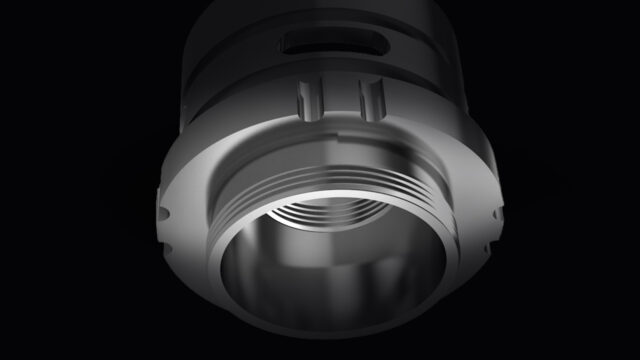
Common alloys you’ll see (short take):
Austenitic grades — good corrosion resistance, decent toughness.
Precipitation-hardening grades — higher strength after heat treat.
Pick the alloy for the job: corrosion and formability, or strength and hardness. Don’t expect one alloy to be perfect for everything.
Typical aerospace parts made by Stainless Steel Casting:
Fuel system fittings. Valve bodies. Manifolds. Brackets and mounts. Flow nozzles. Small structural supports. These are parts that need to hold pressure, resist fluids, and sometimes take mechanical loads. Casting makes them in shapes that would be costly or impossible by machining alone.
How they make them — the short list:
Investment (lost-wax) casting — for thin walls and good surface finish.
Sand or shell molds — for bigger, heavier pieces.
Centrifugal — for round, dense parts.
Each method has trade-offs. Investment gives precision; sand is cheaper for large volumes; centrifugal can cut porosity in certain shapes.
Design tips that save you grief:
Keep wall thicknesses consistent where possible. Sudden changes invite shrinkage and defects. Use generous fillets instead of sharp corners — metal flows better. Think about how the metal feeds the cavity; gating and riser placement matter more than most people expect. If strength is crucial, specify the right heat treatment in the drawing. And leave room for inspection and machining allowances.
Testing and traceability — non-negotiable:
Aerospace parts need records. Melt numbers. Heat-treatment logs. NDT reports — X-ray, ultrasonic, or dye-penetrant as the case requires. Mechanical tests. Chemistry checks. If a part fails, you must trace it back to a batch. That rule doesn’t change.
When not to use Stainless Steel Casting:
If the absolute lightest weight or the highest temperature resistance is the top priority, look elsewhere — titanium or nickel alloys might be the better fit. Casting stainless is a trade-off: you gain manufacturability and corrosion resistance, and you accept some weight and cost.
Final, plain takeaway:
Stainless Steel Casting gives aerospace engineers a practical way to make complex, durable, pressure-bearing parts that stand up to corrosive service and demanding inspections. It’s not the answer to every problem, but used where its strengths match the need, it’s hard to beat.