
You see a lot of fancy marketing about stainless steel. But if you have spent any time near a chemical plant or a refinery, you know the truth. The environment is brutal. It’s hot, the pressures are high, and the stuff flowing through the pipes wants to eat everything away. So, when we talk about Stainless Steel casting for this industry, we aren’t talking about making things look pretty. We are talking about survival.
I have visited facilities where a single valve failure can shut down an entire line for days. That is a massive cost. That’s why material choice isn’t just a specification on a drawing; it’s a business decision. And for the really nasty stuff—the high temperatures, the vibration, the aggressive chemicals—cast stainless steel isn’t just an option. It’s the standard.
Why does it handle the heat—literally?
The big reason is the alloy itself. Stainless steel, especially grades like 316 or the more exotic ones we cast, forms a protective layer. It’s not just “coated” with something that can scratch off. That protection is part of the metal. When you expose it to high temperatures in a furnace or a cracking unit, it doesn’t weaken and sag the way some other materials might. It holds its shape. It holds its strength.
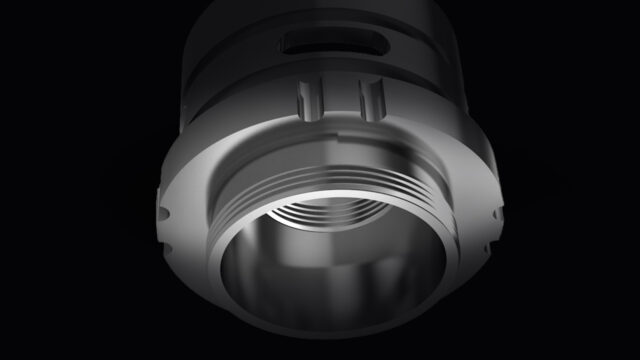
Based on my experience, the real challenge isn’t always the bulk flow of liquid, though. It’s the small stuff. Think about a pump housing. The liquid rushing through causes vibration. Over time, that vibration can crack weaker metals. Or think about a fitting in a pipe. The geometry is complex; it has corners and bends where stress builds up. A casting can handle that complexity. We can create a single, solid piece with no weak seams that might leak. That’s a huge win.
We also need to talk about the “nasties.”
In this line of work, you are dealing with sulfur, chlorides, and acids. Regular carbon steel just rolls over and dies in that environment. It rusts. It pits. It fails. But a properly specified stainless steel casting? It just sits there, quietly doing its job year after year.
In our tests, we have seen cast components outlast fabricated parts by a huge margin, simply because the casting process lets us tailor the material’s density and eliminate micro-porosity that could become a starting point for corrosion. It’s about making the metal as consistent as possible, so there are no weak spots for the chemicals to attack.
So, what does this mean for a plant manager or an engineer?
It means less downtime. It means you aren’t scrambling to replace a cracked valve housing in the middle of a freezing night. It means safety. Because when you are dealing with flammable or toxic substances, you need to know your equipment can take the hit.
Stainless steel casting gives you that reliability. It turns a complex, high-stress part—like a pump impeller spinning at thousands of RPMs in a corrosive soup—into a routine item you don’t have to worry about.
It handles the pressure. It shrugs off the corrosion. It stands up to the heat. For the chemical and petrochemical industry, that peace of mind is everything. And that’s why, when the process gets tough, the tough start with a casting.